
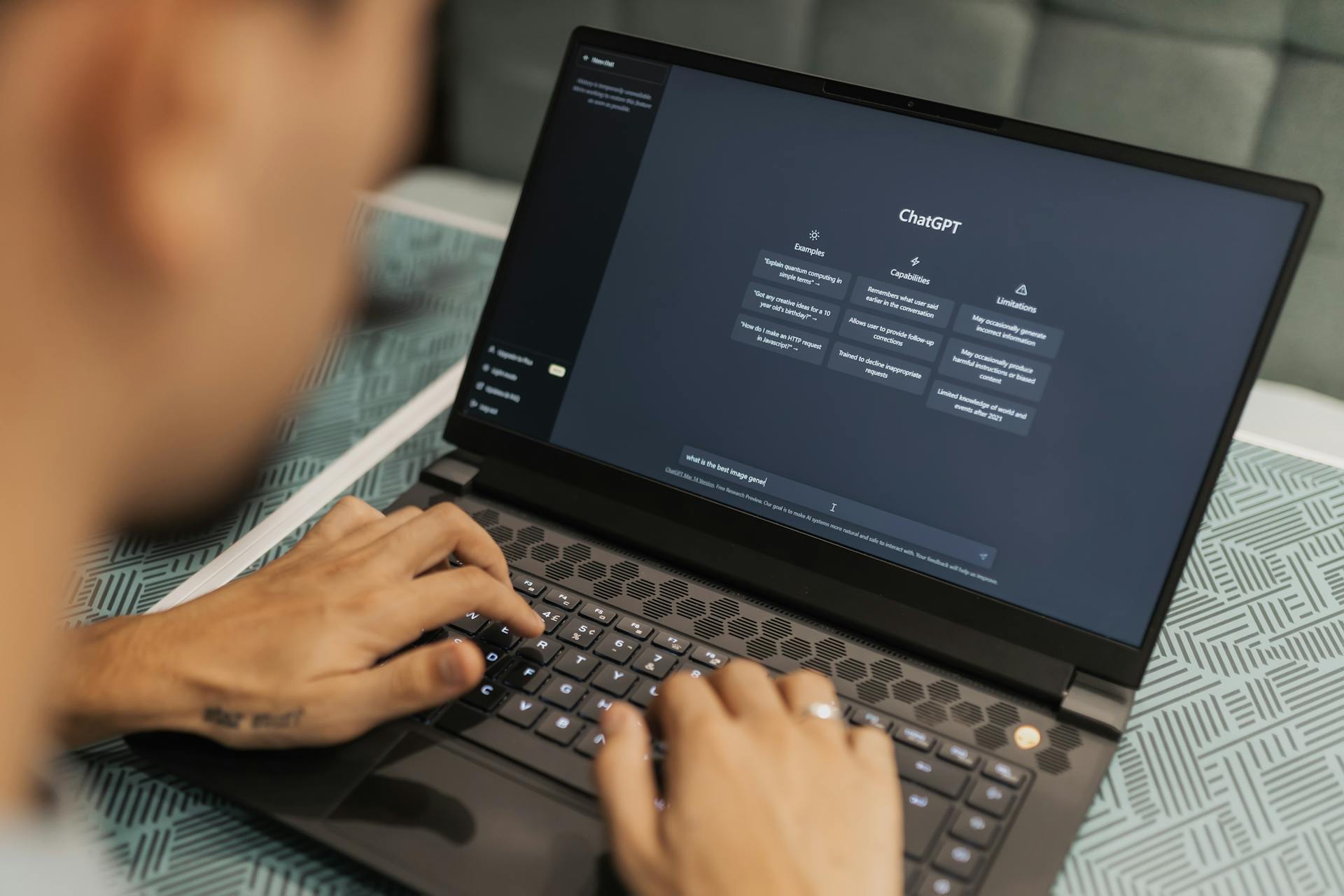
AI tools have become part of everyday life faster than any technology before them. People use them to write messages, generate ideas, translate texts, and even make business decisions based on their responses.
Everything feels simple: you ask a question, you get a solution. Fast, efficient, and often free.
But very few people stop to ask – what are you actually giving in return?
Because just like in the real world, in the digital world “free” almost never means without a cost. For decades, people have said that if you get something for free, you are the product. With AI tools, that can become especially complex.
What you write is not just a question – it’s a signal
When you use an AI tool, you’re not just entering text. You’re providing context. The questions you ask, the problems you’re trying to solve, the way you think, even the tone you use – all of this builds a picture. You may never have used your name and surname in a conversation, but chances are you’ve already created a profile that says far more about you than you think.
If you ask about work, you reveal professional dilemmas. If you seek financial advice, you signal your situation. If you use AI to write messages or content, you reveal your communication style and decision-making patterns.
In other words, you’re not just sharing information – you’re sharing the way you think. And that is the one thing AI tools themselves don’t actually have – the ability to think. But with enough inputs like this, it can appear as if there is real reasoning on the other side, while in reality, thanks to the sheer power of computing, it is “only” processing data fast enough to give you the most probable answer.
AI as a tool that asks for trust, not explanation
Unlike most technologies we’ve used so far, AI doesn’t ask you to understand it – it asks you to trust it. You don’t see how it arrives at answers. You don’t see what happens in the background. You simply get a result that often sounds convincing and logical. And that is usually enough for you to accept it.
The problem is that the line between help and reliance quickly disappears. You start using AI for small things, and then for bigger decisions. Without much verification, because it’s easier to trust than to analyze. And that’s when the relationship changes – the tool is no longer just support, but becomes a filter through which you view information.
When the tool starts thinking instead of you
The biggest change AI brings is not technical – it’s mental.
People increasingly skip the thinking process and go straight to the answer. Instead of developing ideas, they generate them. Instead of questioning, they ask. At first glance, this saves time. In the long run, it changes the way decisions are made. Because once you get used to always having a faster path, you slowly lose the need to find solutions on your own. And that’s a trade-off most people don’t notice.
You’re not just giving data. You’re giving away part of the control over how you think, which is why it’s important to always be aware of where to draw the line when using these very powerful tools.